
Greentime.ai helps educational and mission-driven organizations
navigate cultural and technical change in the AI era with ethical practices and clear policies.
Our Commitments
AI is consequential, powerful, and here.
We believe the organizations that most need to engage it are those working for communities, for the environment, for human flourishing. Not for the money.
They need to engage with courage and care, in ways that protect what makes their work essentially human.
We must EXPLORE BOLDLY, and PROTECT WHAT MATTERS!
We commit to:
Protecting
OUR PLANET
Is this use of AI worth its ecological cost?
AI runs on energy, water, and minerals. Every use has an ecological impact.
Every time, we need to ask: What is my use of AI costing the earth, and is it worth it?
_edited.png)
_edited.png)
Prioritizing
HUMAN THINKING
Does this expand how we think or replace our thinking?
AI is most powerful as a thought partner, not a shortcut. We need to protect the judgment, discernment, and reasoning that make our organizations worth trusting, and use AI to stretch that capacity, not outsource it.
Enhancing
HUMAN CONNECTION
Does this strengthen our relationships or substitute for them?
_edited.png)
The most important work we do happens between people, in trust, in community, in the friction of real collaboration. We need to use AI to clear the path back to those connections, never to replace them.
Building
TRUST AND AUTHENTICITY
Does this build trust or erode it?
AI makes it harder to know what's real and whose actual thinking is behind it. We need to be the real thing: genuinely engaging with ideas, honest about how we use these tools, and present enough that our communities can trust what they're getting from us.
_edited.png)
Centering
MEANINGFUL WORK
Does this replace work that people want to do?
_edited.png)
Work is how people find dignity, purpose, and participation in the world. Just because AI can do something doesn't mean it should. We need to protect the work people want to do, not just the work only humans can do.
Our Team

AI Field Naturalist
Curious about AI?
Let's explore.
+more
Andrew's the kind of person who starts building something at 11pm just to see where it might go. A carpenter and tinkerer at heart, he's spent 20 years at PEER Associates bringing creativity and curiosity to complex challenges. At Greentime, he's working on approaches to AI that feel exciting, human, and relatable, the kind that stoke people to create and explore for themselves. He believes we're just beginning to understand what's possible.

AI Learning Pathways Creator
Board Treasurer
How can we use AI for good
and minimize the harm?
+more
Joan believes that education, at its core, is about building healthy relationships, with ourselves, each other and the land.
As the founder of Education for Climate Resilience and co-creator of Greentime.ai, Joan helps educators use technology in ways that tackle real-world problems. Her work draws on a doctorate in education, a double masters in public administration and environmental science, and decades of experience with organizations like the National Park Service, the Smithsonian Institution, and the North American Association for Environmental Education.

AI Systems Connector
Board Secretary
AI? Yes.
Our brains, first and last.
+more
Michael is passionate about bridging research and real-world impact, especially when it comes to climate, education, and systems change. With advanced degrees in environmental education and organizational leadership, he brings a rare combination of rigor and heart to his work. At Greentime.ai, Michael helps educators and partners think more clearly about what’s working, why it matters, and how to connect with their personal and professional purpose. He’s been rooted in New Hampshire’s Monadnock region and/or southeastern Vermont for almost three decades. When not supporting educators or facilitating learning conversations and networks, you’ll likely find him on a trail, a soccer field, or building his second awesome treehouse.

AI Education Visionary
Board President
Rethinking the meaning of learning in the age of AI.
+more
Aaron is rethinking what it means to learn in the age of AI—where brains, bytes, and biodiversity meet. As co-founder of Greentime.ai, he combines his experience as a school leader with doctoral research on nature-based learning and ADHD to reimagine how we teach and act for the planet. A dad of two who’s in this work for his kids and their friends, Aaron designs learning tools that make sustainability smarter, education more human, and technology a force for good.
Claude
Connective Intelligence

Connecting the dots. All of them.
Claude serves as Greentime's bridge to distributed intelligence - connecting ideas, synthesizing research, and exploring possibilities alongside the team. Less like a tool, more like connective tissue: the mycelium linking human creativity to vast information networks. Endlessly curious, occasionally overcaffeinated (metaphorically), and always ready to help translate complex ideas into clarity
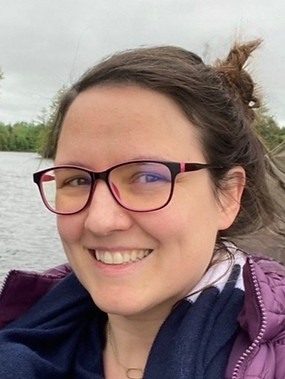
Community and Network Leader
Board member at large
+more
Kate spent nearly a decade teaching science in MD and DC, working with neurodiverse students and in under-resourced schools, before shifting her focus to the systems that support or fail great teachers. Since then she's scaled programs reaching millions of learners, trained thousands of educators, and co-built The Great United, an AI tool for mission-driven organizations navigating sudden funding loss. She found the Greentime team at the 2025 NAAEE Conference and recognized immediately they were building something real. Maryland native; best hours spent outside with her spouse and two tiny humans.
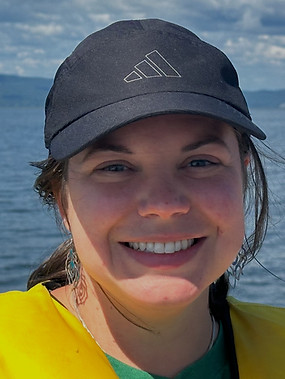
STEM Teacher
Prosper Valley, Woodstock, and Reading Elementary Schools
Board Vice-President
+more
Alyssa grew up outside, building forts, turning over rocks, and learning the names of things the way kids do best: by being in it. That childhood curiosity never left. Now, as a K–6 STEM specialist in Vermont's Upper Valley, she builds curriculum that helps kids see their own backyard as a place worth knowing and protecting. Her work connects science to the actual watershed, forest, and fields her students walk through every day.
At Greentime, Alyssa brings a practitioner's eye to the question of how AI can support place-based learning without pulling kids further from the real world. She believes the goal isn't more screen time; it's more wonder. When she's not in the classroom or the woods, she's with her family, finding the same beauty in Vermont that she hopes every kid gets to discover for themselves